
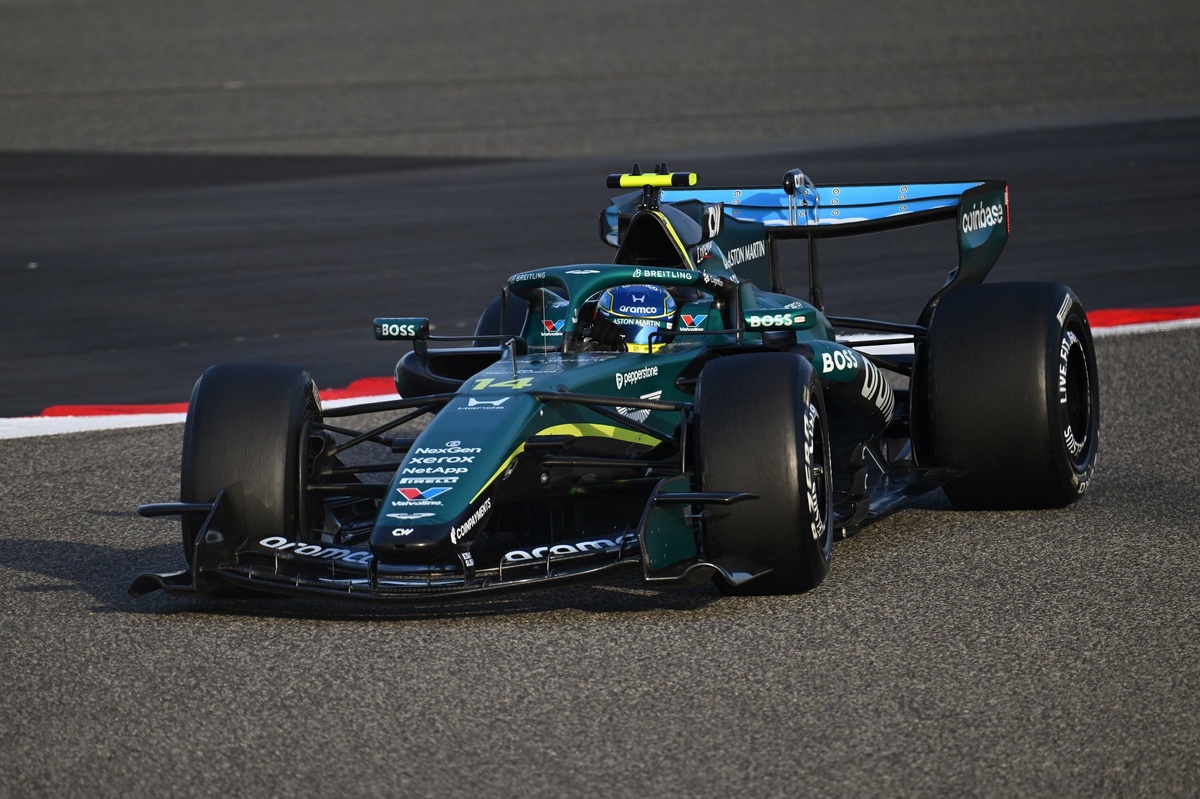

Get ready for a seismic shift in Formula 1 driving, because Fernando Alonso just dropped a bombshell that will make purists wince: the 2026 F1 cars are set to fundamentally change how drivers attack the most thrilling sections of a track. The two-time world champion believes the focus on energy management will dramatically alter cornering speeds, sparking a crucial debate about the future of F1 and the essence of driver skill.
Key Points:
- Fernando Alonso predicts 2026 F1 cars will demand drivers take high-speed corners up to 50km/h slower.
- This radical change is driven by new engine regulations, prioritizing energy harvesting and deployment.
- Max Verstappen famously dubbed the upcoming machinery "Formula E on steroids," a sentiment Alonso largely echoes.
- The Aston Martin veteran suggests the emphasis on energy strategy could diminish the impact of pure driving skill in certain sections.
The New Driving Paradigm: Speed vs. Strategy
The whispers about F1's 2026 regulations have turned into a roar, with Fernando Alonso at the forefront. The seasoned campaigner revealed that drivers will be forced to back off by as much as 50km/h in high-speed corners. This isn't about car performance limits but a strategic compromise driven by the vastly increased electric power unit component.
Consider Bahrain's Turn 12, historically a flat-out challenge for the brave. Alonso explains that the thrill of finding those extra few kilometres per hour will be gone, replaced by calculated energy conservation. This revelation aligns eerily with Max Verstappen's blunt assessment, who recently branded the future cars as "Formula E on steroids."
Why Slower Corners? The Energy Equation
The heart of the matter lies in the 2026 F1 cars' sophisticated energy management systems. Drivers will need to aggressively harvest kinetic energy during deceleration, then deploy it strategically. Wasting precious electrical power on high-speed cornering simply doesn't yield the same lap time gains as unleashing it down a long straight.
Alonso starkly illustrated this, noting that a driver could take Turn 12 at 200km/h instead of 260km/h – a speed even a "chef" could manage, as he quipped. The essence of this comment is profound: when the optimal line is dictated by energy preservation rather than raw mechanical grip, the driver's finely tuned instincts become secondary to an overarching strategic directive.
A Changing Definition of Driver Skill?
This isn't the first time F1 regulations have shifted the goalposts for drivers. Alonso himself pointed out that just a few years ago, Max Verstappen's dominance was partly due to Red Bull's superior downforce, allowing him to carry more speed through corners than rivals. Yet, the current shift feels different, touching on the fundamental challenge of cornering.
The Aston Martin ace openly longs for the "unbeatable" era of the late 90s and early 2000s. Back then, driving was about pushing flat out, finding the absolute mechanical limits, and demonstrating "pure skills" and adrenaline-fueled talent. The 2026 rules appear to move further away from that raw, visceral experience.
The Adaptable Apex Predator
Despite his concerns, Fernando Alonso remains pragmatic. He acknowledges that Formula 1 has always evolved, adapting to new technologies and regulations. "We close the visor, we go," he stated, highlighting the unwavering competitive spirit that defines these athletes.
While the "driving skills" input might be reduced in certain aspects, the challenge simply shifts. It becomes about mastering a new kind of complex energy puzzle at 300km/h. The full picture will only emerge after a few races in 2026, but Alonso's insights have certainly ignited a passionate debate about the soul of Formula 1.


