

Malaysia’s men’s doubles badminton squad is emerging as one of the strongest in the world, giving national coach Herry Iman Pierngadi a unique challenge as he manages an increasingly deep pool of talent. With as many as eight pairs regularly qualifying for top-tier BWF World Tour events, Malaysia now enjoys both strength in numbers and quality at the highest level.
This depth marks a significant shift from previous years, when the country relied on only a handful of top combinations. Today, multiple pairs are capable of competing deep into tournaments, creating healthy internal competition and raising overall performance standards. Herry described the situation as a “pleasant headache,” emphasizing that having more competitive pairs increases Malaysia’s chances of success on the global stage.
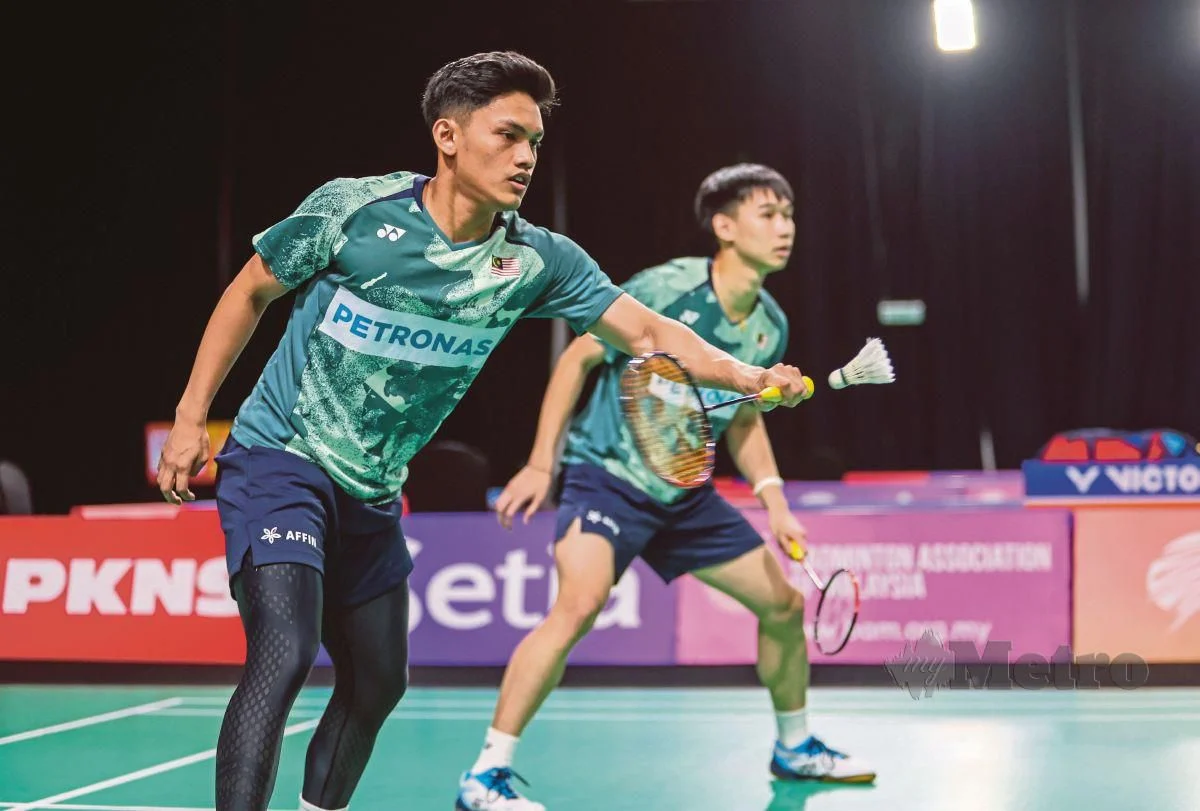
The impact of this depth was evident at the All England Open, where several Malaysian pairs were drawn in the same half of the competition. Leading pairs such as Aaron Chia and Soh Wooi Yik, along with Man Wei Chong and Tee Kai Wun, as well as Goh Sze Fei and Nur Izzuddin Rumsani, were among those competing against one another. Rising pairs such as Wan Arif Junaidi and Yap Roy King also featured, highlighting the depth across both established and emerging players.

Source: Badminton News
On their way to the final, Aaron Chia and Soh Wooi Yik had to overcome fellow Malaysians in earlier rounds, underlining the competitive nature within the squad. They eventually finished as runners-up to South Korea’s top pair Kim Won Ho and Seo Seung Jae. While internal matchups can limit the number of pairs progressing, they also ensure that only the strongest combinations advance.
Recent results further support Malaysia’s growing momentum. Aaron Chia and Soh Wooi Yik have been consistent performers, finishing runners-up at the Malaysia Open and reaching the semi-finals of the India Open. Meanwhile, independent pair Goh Sze Fei and Nur Izzuddin Rumsani secured the Indonesia Masters title, ending a year-long wait for a championship and reinforcing the squad’s overall strength.
Compared to other badminton nations, Malaysia’s advantage lies not just in the number of pairs but in their ability to compete consistently at a high level. While countries such as Indonesia and Taiwan also field multiple teams, fewer have managed to progress deep into tournaments.
For Herry, the challenge now is to manage this depth effectively while maintaining harmony within the squad. With several pairs capable of delivering strong results, Malaysia is well-positioned to contend for major titles, turning what once seemed like a selection dilemma into a clear competitive advantage.