
Formula 1 is a brutal arena where innovation wins, and Mercedes appears to be making an early, audacious statement with its 2026 F1 front wing design. While rivals conform to predictable interpretations of the new active aerodynamic rules, the Silver Arrows have carved their own path, potentially unlocking a significant performance edge.
Key Points:
A Bold Departure for the Silver Arrows
The 2026 F1 regulations usher in a new era of technical freedom, especially around critical aerodynamic components. Teams are scrambling to find the smartest interpretations, from sidepods to suspension. Yet, it's the front wing where Mercedes has truly shown its hand, delivering a design that starkly contrasts the prevailing grid philosophy.
The Revolutionary Active Aero Concept
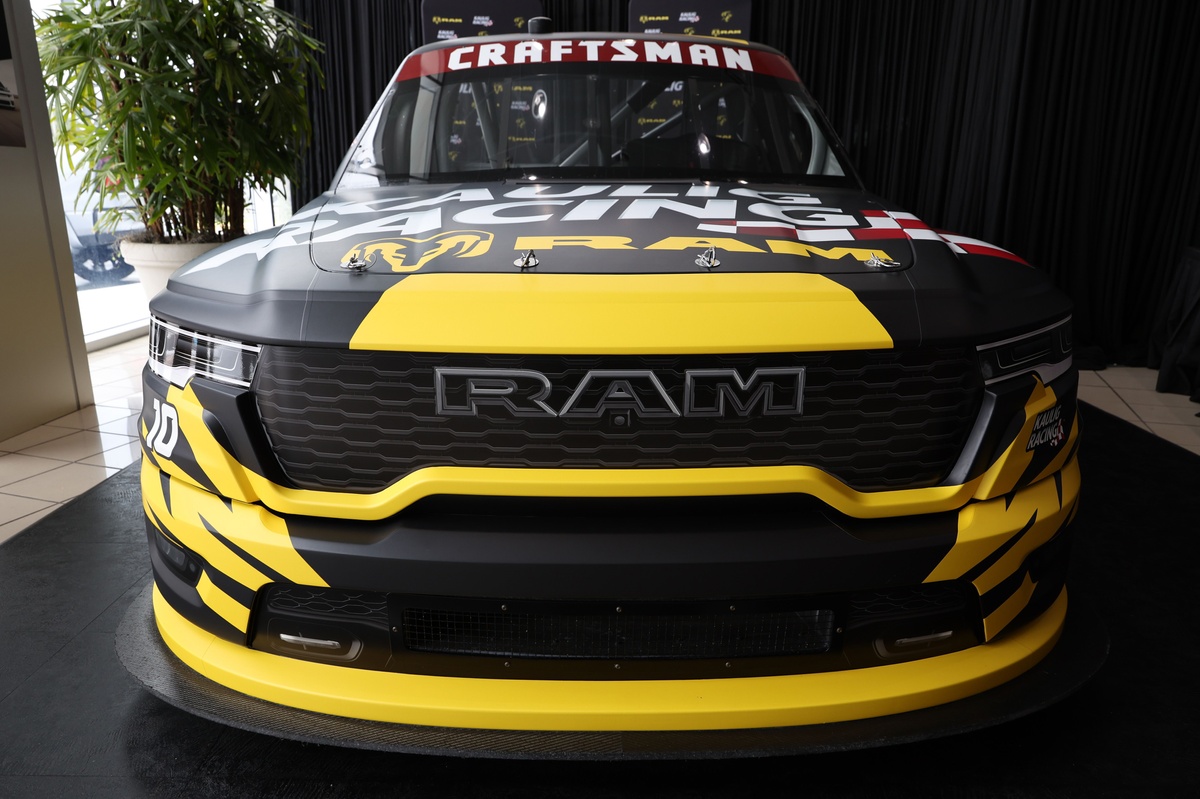
The FIA's primary goals for the 2026 rules are clear: enhance racing by limiting "outwash" and introduce active aerodynamics on the front and rear wings. This active element is crucial for mitigating drag, thereby reducing the strain on the engine's hybrid system. Most teams, including Racing Bulls, have opted for two movable elements on their front wings to maximize this drag reduction.
Mercedes' Maverick Front Wing: A Deep Dive
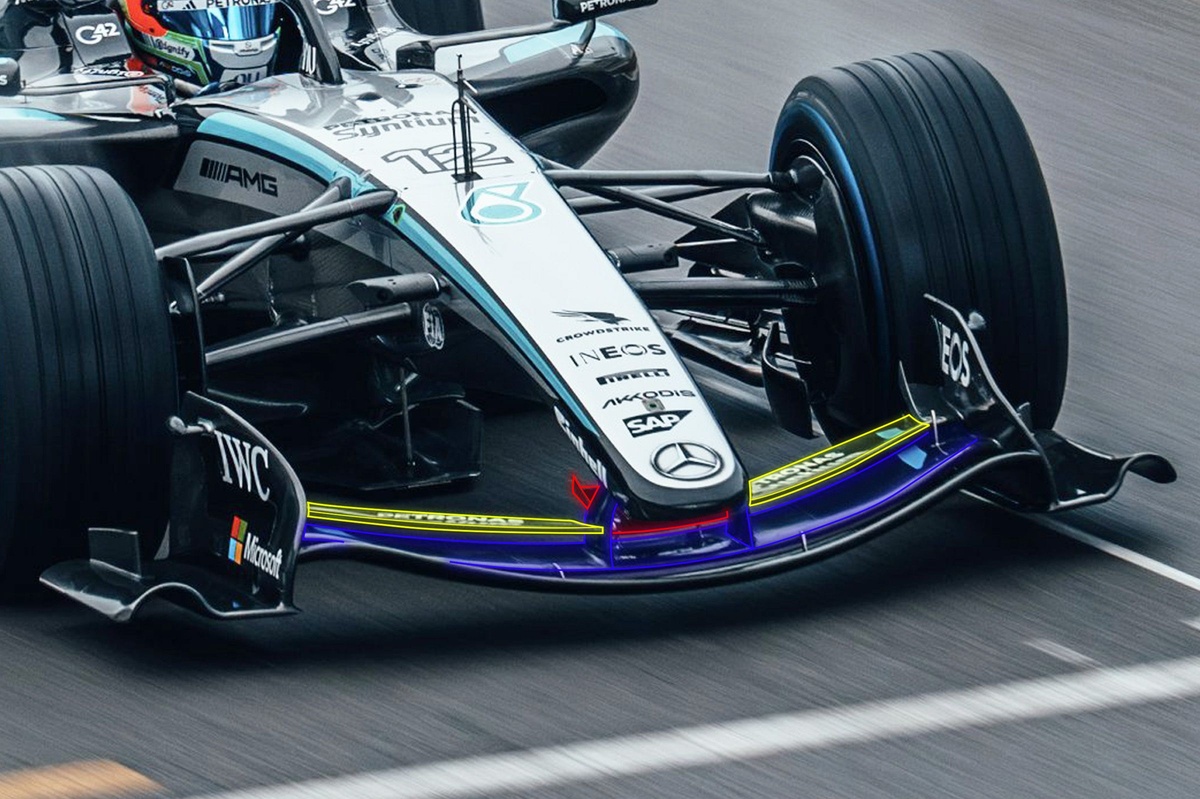
Where the W17 truly stands apart is its unconventional mounting of the nose-to-wing pylons. While other competitors attach these directly to the main plane of the front wing, Mercedes has anchored them to the secondary plane. This seemingly subtle choice has a profound consequence: only the outermost, tertiary flaps (highlighted in yellow in analysis images) are free to move.
Despite the strict rules on rotation axis and deflection limits (30mm for primary, 60mm for secondary), the FIA's framework allows teams considerable freedom in which flaps are made active. Mercedes is exploiting this loophole, suggesting a fundamentally different approach to harnessing the wing's elements and managing airflow.
Unlocking Performance: The Airflow Advantage
During recent testing, Mercedes engineers were spotted employing "wool tufts" – an old-school yet highly effective method – to meticulously analyze airflow behavior across their unique front wing. This granular attention to detail underscores their commitment to understanding every nuance of their design.
But the innovation doesn't stop there. The W17's design cleverly incorporates a distinct channel beneath the nose. This pathway is engineered to meticulously guide airflow directly towards the underfloor and the T-tray area. This critical management of air, further optimized by specialized appendages known as flow conditioners (highlighted in red), aims to enhance overall aerodynamic efficiency and downforce generation.
Strategic Gamble or Masterstroke?
This bold design raises a crucial question: is this a permanent fixture for the W17, or will Mercedes deploy track-specific variations throughout the season? Circuits like Silverstone, known for their low-downforce requirements, might demand a different setup. Insiders suggest that the optimal downforce level with active aero engaged will indeed vary significantly by track, necessitating substantial tuneability.
History shows us that teams have previously modified nose lengths mid-season without crash re-tests, indicating a degree of flexibility within the regulations. Could Mercedes similarly adjust their pylon positions? Only time will tell if this unique Mercedes F1 front wing strategy becomes a decisive advantage in the hotly anticipated 2026 F1 season, or if their rivals' more conventional designs prove superior.