
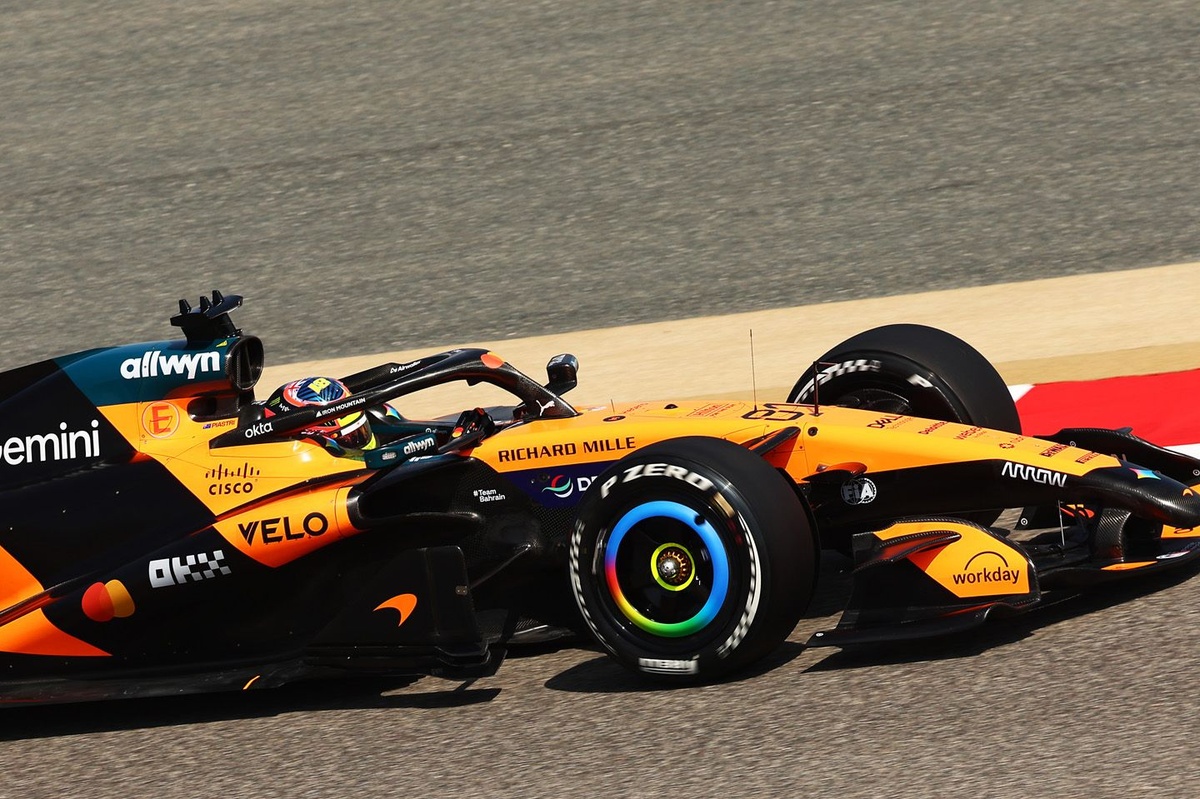

The 2026 Formula 1 season promises a radical departure from everything we know, and McLaren's Oscar Piastri is already signaling where the biggest challenges lie: an almost untamable surge of power on corner exits that will test every driver's limits.
Key Takeaways from Piastri on F1 2026 Cars
- F1 2026 cars feature a "crazy amount of power" on corner exit, according to Oscar Piastri.
- The new regulations introduce lighter chassis, significantly less downforce, and a 50-50 electrical/ICE power split.
- Energy management becomes paramount, even requiring counter-intuitive actions like "lifting on straights."
- Drivers like Esteban Ocon suggest "forgetting everything" learned since karting to adapt to the new paradigm.
The Electrified Powerhouse: F1's 2026 Engine Revolution
The upcoming Formula 1 regulations are rewriting the rulebook, especially concerning the power units. We're moving towards a near 50-50 split between the internal combustion engine and a vastly amplified electrical system. This isn't just a tweak; it's a seismic shift designed to push the boundaries of hybrid technology.
This increased electrical reliance translates directly to raw, immediate acceleration. Drivers will feel an unprecedented surge, particularly when exiting corners. Piastri candidly admitted it's a "crazy amount of power," making management an immense challenge.
Taming the Corner Exit Beast
While much has been discussed about energy harvesting and strategic "downshifting on straights," the sheer force on corner exit has been a quieter revelation. The goal is faster lap times through efficiency, but the byproduct is a beastly acceleration that demands absolute precision. This will separate the good from the great in F1 2026.
Chassis & Downforce: A Lighter, More Agile Era
Beyond the engine, the 2026 F1 cars will also be leaner and meaner. A 32kg reduction in chassis weight, coupled with significantly less downforce, creates a fundamentally different driving dynamic. While the cars still feel like Formula 1 machines, the sensation is distinctly new.
This combination of reduced weight and downforce with explosive power means drivers will constantly be on the edge. The previous generation saw some of the fastest cars ever, making any perceived reduction in grip or stability a difficult adjustment.
Rewiring a Driver's Instincts
The core challenge for every driver, from rookies to champions, will be unlearning years of ingrained habits. Oscar Piastri highlighted the "complex" and "not very instinctive" actions required, such as lifting off the throttle on straights for energy harvesting. This goes against every competitive fiber in a racing driver's body.
Esteban Ocon's stark warning to "forget everything that we’ve learned since go-karts" resonates deeply here. The 2026 regulations demand a complete mental and physical recalibration, turning traditional racing instincts on their head. It's not just about speed; it's about intelligent, adaptive driving.
The Fan Perspective: What to Expect
For the fans, these radical changes promise an exhilarating spectacle. Expect more dynamic racing, where strategic energy management and raw driver skill become even more critical. The cars will be a handful, leading to potentially more errors but also more breathtaking displays of control.
The 2026 Formula 1 season won't just be about who has the fastest car, but who can master its complex new demands. Oscar Piastri's early insights confirm that a thrilling, unpredictable era of F1 racing is on the horizon.


